


Why Your Child Feels More Carsick in an SUV Than in a Sedan
June 11, 2026
Key Highlights:
● Motion sickness is a common problem for children during SUV travel.
● Simple changes in seating position can significantly reduce symptoms.
● Proper trip preparation can prevent nausea before it starts.
● Family road trips become more enjoyable when children travel comfortably.
Estimated Reading Time: 11 minutes┃Post by: Morgan Hartwell
The vacation starts perfectly. The SUV is packed with luggage, snacks, drinks, and entertainment for the kids. Everyone is excited about the destination. Then, forty-five minutes into the trip, a child in the back seat suddenly says, "My stomach hurts." For many families, this situation is frustratingly familiar.
Motion sickness affects millions of children worldwide and is especially common between the ages of 2 and 12. While SUVs offer excellent visibility, comfort, cargo space, and passenger capacity, they can also expose children to vehicle movements that trigger nausea, dizziness, sweating, headaches, and vomiting.
Parents often assume motion sickness is unavoidable, but in reality, many cases can be reduced through simple adjustments before and during travel. Understanding why motion sickness happens is the first step toward making family road trips more comfortable.
Motion sickness occurs when the brain receives conflicting information from three different systems:

When a child looks down at a tablet while riding in an SUV, their eyes tell the brain they are sitting still. Meanwhile, the inner ear detects acceleration, braking, turns, and bumps in the road. The brain struggles to reconcile these conflicting signals, often resulting in nausea.
Consider the following common travel scenarios:
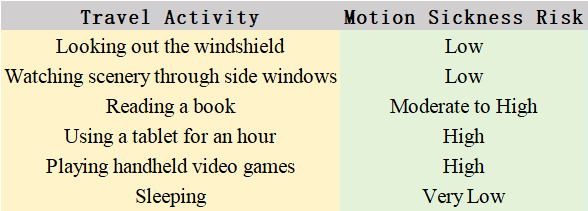
Many families unknowingly increase the likelihood of motion sickness by relying heavily on screens to keep children occupied during long drives.
SUVs can present additional challenges because their higher center of gravity often results in more noticeable body movement when cornering, climbing hills, or traveling on uneven roads. Larger SUVs may also create more pronounced side-to-side motion in rear seating areas.

Fortunately, several practical strategies can dramatically improve comfort levels.
Why Children Experience Motion Sickness More Often
Children are generally more susceptible to motion sickness than adults because their sensory systems are still developing.
A child riding in the third row of a large SUV may have limited forward visibility. They feel the vehicle turning and accelerating, but cannot clearly see the road ahead. This increases sensory conflict and makes nausea more likely.
Research and clinical observations consistently show that visibility is one of the most important factors affecting motion sickness.
Imagine two children traveling for three hours:
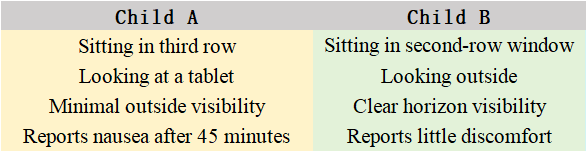
The difference is not necessarily the child. Often, it is the travel environment.
Parents frequently notice that children feel better when they can see distant objects rather than focusing on nearby screens or books.
Another important factor is anticipation.
Drivers rarely experience motion sickness because they know when the vehicle will accelerate, brake, or turn. Passengers, especially young children, do not have this advantage.
Unexpected vehicle movements create stronger sensory conflicts.
For example:
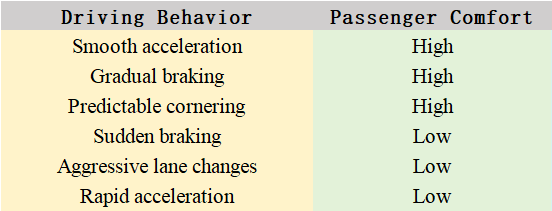
Even children who rarely become carsick may feel uncomfortable when subjected to frequent abrupt movements.
This explains why a relaxed highway journey often feels much easier than a winding mountain road, even when the travel time is identical.
Practical Ways to Reduce Motion Sickness in SUVs
One of the easiest solutions involves choosing the right seating position.
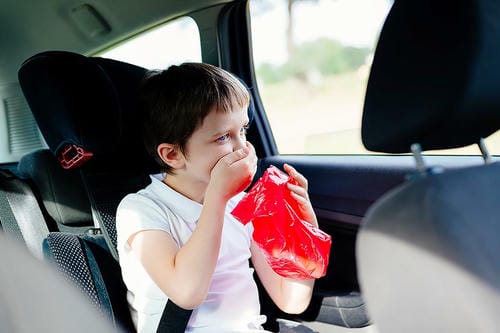
Children who can clearly see outside the vehicle generally experience fewer symptoms. A second-row window seat often provides a better view of the road and horizon than a third-row seat. This visibility helps the brain understand that movement is occurring and reduces the confusion that causes nausea.
The table below compares typical seating experiences.

Parents should always follow applicable child passenger safety guidelines, but when multiple seating options are available, maximizing visibility can be beneficial.
Fresh air is another surprisingly effective tool.
Many children report feeling worse in warm, enclosed cabins. During long drives, opening a window slightly or increasing outside-air ventilation can help reduce symptoms. Medical guidance commonly recommends fresh airflow as part of motion sickness prevention strategies.
Food choices before travel also deserve attention.
A large breakfast immediately before departure may increase the likelihood of nausea. Greasy foods, heavy meals, and excessive sugar can make a sensitive stomach more vulnerable during vehicle travel.
Consider the following comparison.
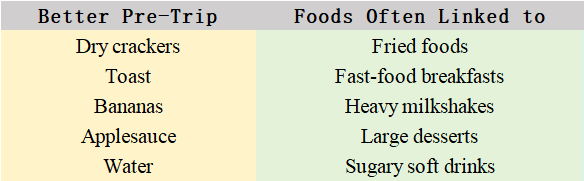
Many experienced traveling families prefer offering smaller meals before departure and keeping snacks light during the journey. Mayo Clinic guidance similarly recommends avoiding large meals and offering bland snacks when needed.
Hydration is equally important.
Children who become dehydrated may feel more fatigued and less comfortable during travel. Water should remain easily accessible throughout the trip, especially during warm weather.
Regular breaks can dramatically improve comfort as well.
Rather than waiting until a child feels sick, many successful road-trip families schedule stops before symptoms appear.
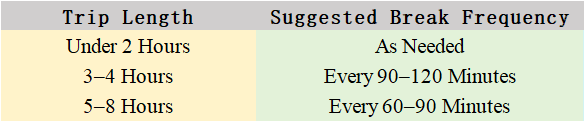
During breaks, children should walk, stretch, and spend a few minutes outdoors. Looking at distant objects and moving around helps reset the sensory systems involved in motion sickness.
Head stability can also make a difference.
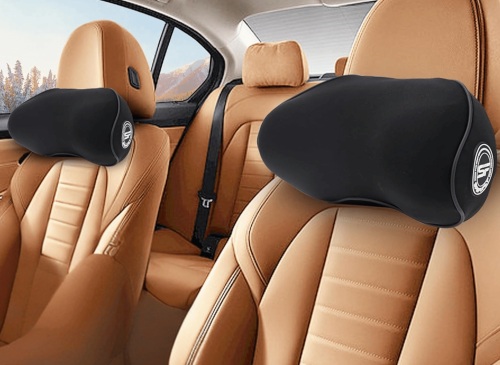
Medical experts often recommend keeping the head supported against the seatback whenever possible. Excessive head movement may worsen symptoms by increasing conflicting balance signals. Neck pillows and supportive travel cushions can help children maintain a more stable position during long drives.
Many parents also find success by coordinating travel schedules with nap times.
When children sleep, visual motion signals are reduced, which often decreases motion sickness symptoms. Families with younger children frequently discover that early-morning departures or travel during normal nap periods result in smoother journeys overall.
For children who regularly struggle with motion sickness, maintaining a travel journal can be surprisingly useful.
A simple record may reveal patterns such as:

Over time, parents can identify specific triggers and adjust future travel plans accordingly.
Online parenting communities frequently share similar experiences. Many parents report that symptoms often appear during longer trips, especially when children spend extended periods looking down at books or screens. Others note improvements when children can focus on the road ahead or when breaks are taken more frequently. While these experiences vary from family to family, they reinforce the importance of identifying individual triggers.
For children whose symptoms remain severe despite these measures, consultation with a healthcare professional may be appropriate. Certain medications can help prevent motion sickness in some cases, but parents should always seek professional guidance before administering medication to children.

The encouraging news is that many children become less susceptible as they grow older. Their sensory systems gradually adapt, and travel often becomes easier during adolescence. Until then, success usually comes from preparation rather than reaction.
A child who begins a trip well-rested, properly hydrated, seated where they can see outside, and traveling in a smoothly driven SUV is far more likely to arrive smiling than sick.
Family road trips should create memories of destinations, adventures, and time together—not memories of nausea and discomfort. By understanding the causes of motion sickness and taking a few preventive steps, parents can make every mile more enjoyable for everyone in the vehicle.
(This article is intended for informational and educational purposes only. It should not be considered medical advice. Parents should consult a qualified healthcare professional regarding persistent motion sickness symptoms or before administering any medication to children.)
FQAs
1. Why does my child only get motion sickness in an SUV but not in a sedan?
SUVs typically sit higher off the ground and may experience more noticeable body movement during turns, hills, and uneven road conditions. Some children are particularly sensitive to these motions.
2. Is it better for a child to sit in the front seat?
Children should always ride in seating positions that comply with applicable safety recommendations for their age, size, and local regulations. Safety requirements should always take priority over motion sickness concerns.
3. Can motion sickness occur during short trips?
Yes. Some children may develop symptoms within 15 to 30 minutes, especially if they are reading, using screens, or traveling on winding roads.
About Author
Morgan Hartwell is a fictional automotive writer specializing in family vehicle comfort, road-trip planning, passenger wellness, and practical SUV ownership strategies. For more than a decade, Morgan has researched how vehicle design, driving habits, and travel preparation affect the everyday experiences of families on the road.
References
American Academy of Pediatrics. (2025). Traveling safely with children.
Cleveland Clinic. (2025). Motion sickness: Causes, symptoms, and treatment.
MedlinePlus. (2025). Motion sickness. U.S. National Library of Medicine.
National Institutes of Health. (2025). Understanding motion sickness and vestibular responses.
Stay awhile and explore more articles on our blog for practical SUV ownership tips, family travel solutions, maintenance advice, and smarter ways to make every journey more comfortable.