


Why Your Auto Start-Stop System Suddenly Feels More Aggressive
June 12, 2026
Key Points:
● A suddenly aggressive auto start-stop system often points to changes in battery condition or sensor readings.
● Modern vehicles constantly monitor battery charge, temperature, and electrical load before deciding when to stop the engine.
● Battery management systems can alter start-stop behavior long before a battery completely fails.
● Faulty sensors may cause unexpected engine shutdowns or unusually frequent stop-start events.
● Proper diagnosis can prevent unnecessary battery replacements and costly repairs.
Estimated Reading Time: 10 Minutes┃Post by: Nathan Mercer
You pull up to a traffic light on your usual morning commute. As you gently apply the brake, the engine shuts off much earlier than it used to. Later, while creeping through slow traffic, the engine stops again even though the vehicle is barely settled. A week ago, the system seemed relatively unobtrusive. Now it feels eager to switch the engine off at every opportunity.
Many drivers assume the auto start-stop system is malfunctioning when this happens. Others suspect a software update or a hidden mechanical problem. In reality, a sudden change in start-stop behavior is often the result of the vehicle reacting to battery conditions, sensor inputs, or adjustments made by the battery management system.
Modern start-stop systems are far more sophisticated than many drivers realize. They constantly evaluate dozens of variables before deciding whether shutting off the engine is safe and efficient. Small changes in these inputs can significantly alter how aggressive the system feels behind the wheel.
Manufacturers originally introduced auto start-stop technology to reduce fuel consumption and emissions during idle periods. Depending on traffic conditions, fuel savings can reach several percentage points in urban driving. The system relies heavily on battery health, electrical system stability, and sensor accuracy to determine when engine shutdowns should occur.
The following table illustrates common driver observations when start-stop behavior changes unexpectedly.
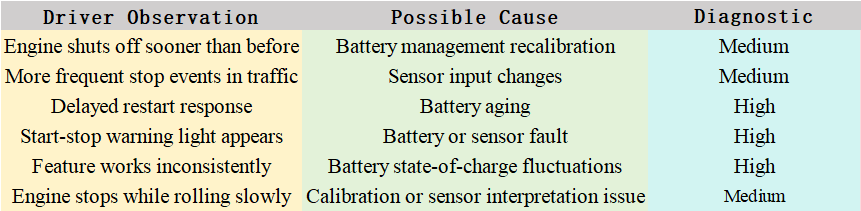
Understanding why these changes occur can help drivers determine whether they are experiencing normal system operation or an issue that deserves inspection.
Why Battery Health Plays Such a Big Role
Most drivers think the battery's only job is to start the engine in the morning. Vehicles equipped with auto start-stop place significantly greater demands on the battery because the engine may restart dozens of times during a single trip. Specialized AGM or EFB batteries are typically required because they can withstand repeated charging and discharge cycles.
To manage this workload, manufacturers install sophisticated Battery Management Systems (BMS). These systems continuously track:
● State of charge
● Battery temperature
● Voltage
● Current flow
● Battery aging
● Estimated health
The vehicle's computer uses this information to decide whether the battery can reliably restart the engine. If battery conditions change, the computer may alter start-stop behavior accordingly.
Consider the following simplified example.
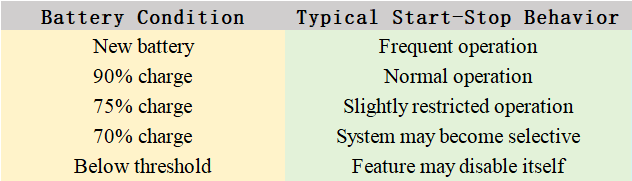
Some vehicles require the battery to remain above roughly 70% state of charge before allowing start-stop operation. If battery conditions fluctuate around this threshold, the system may seem unpredictable from one day to the next.
Ironically, a battery issue can make the system either less active or more aggressive. For example, after a battery replacement, the control module may temporarily operate differently while relearning battery characteristics. In some cases, drivers report noticeably increased stop-start activity immediately after battery service because the system now sees a healthier energy reserve than before.
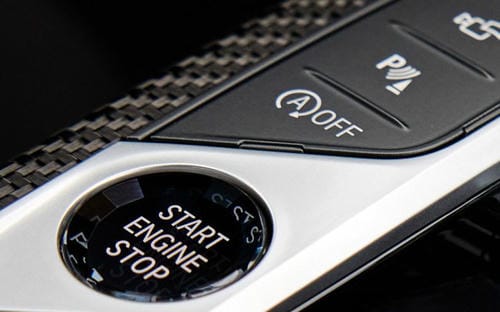
Another common situation occurs when the battery monitoring system has recently been reset. The vehicle may adjust charging strategies and stop-start thresholds as it collects fresh data. Community discussions frequently mention changes in start-stop behavior following battery replacement or BMS resets.
The Sensors That Decide When the Engine Stops
Battery condition is only one piece of the puzzle. Modern start-stop systems rely on numerous sensors throughout the vehicle. These sensors continuously report information to the engine control module.
Common inputs include:
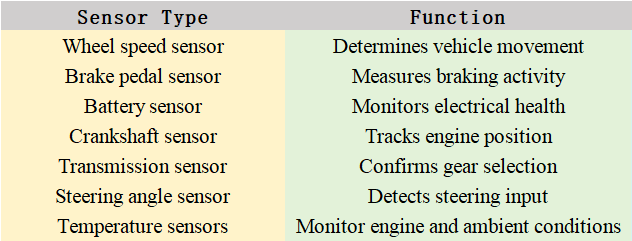
These inputs help determine whether shutting down the engine is appropriate. The vehicle must be confident that a restart can occur instantly and safely before the engine is allowed to stop.
When one of these sensors begins providing inaccurate data, the start-stop system may behave differently. Imagine a wheel speed sensor that slightly underestimates vehicle movement. The control module might conclude that the vehicle has already come to a complete stop when it is still rolling slowly. To the driver, this feels like a suddenly overactive start-stop system.

Likewise, an intelligent battery sensor that misreports battery health may influence how aggressively the system attempts to save fuel. Since the sensor directly affects start-stop decisions, even minor inaccuracies can create noticeable changes in behavior.
Real-World Conditions That Change Start-Stop Behavior
Drivers often overlook how environmental conditions influence system operation. The same vehicle may behave differently in January than it does in July.
The following table shows several common factors that affect start-stop decisions.
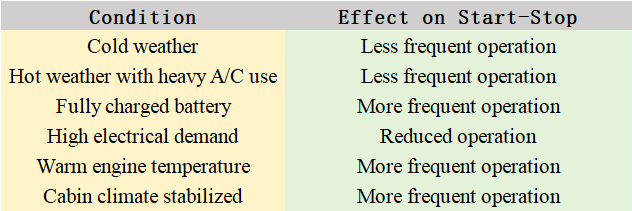
Manufacturers intentionally program these restrictions because passenger comfort and reliability take priority over fuel savings. The engine may remain running if:
● Cabin cooling demand is high
● Windshield defogging is active
● Battery charge is insufficient
● Engine temperature is outside target ranges
● Steering input indicates maneuvering
This means a vehicle that recently received a new battery and is being driven during mild weather may suddenly appear much more aggressive simply because more operating conditions are now being satisfied.
The driver experiences the second scenario as a dramatic behavioral change even though the system is technically operating correctly.
Warning Signs That Suggest a Genuine Problem
Not every aggressive start-stop system indicates a fault. These symptoms frequently appear when battery capacity begins declining or when battery monitoring systems detect abnormalities.
The following table provides a practical troubleshooting guide.
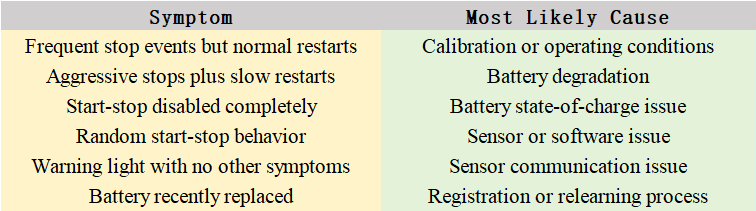
A common mistake involves replacing a battery without registering it in the vehicle's computer. Many modern vehicles require battery registration so the Battery Management System can adjust charging and monitoring strategies for the new battery. Without proper registration, unusual start-stop behavior may occur.
When Should You Have the System Inspected?
Most aggressive start-stop behavior does not require immediate repair. However, inspection becomes worthwhile if:
● The behavior changed suddenly without explanation
● Battery age exceeds three to five years
● Warning messages appear
● Restarts feel noticeably slower
● Electrical accessories behave erratically
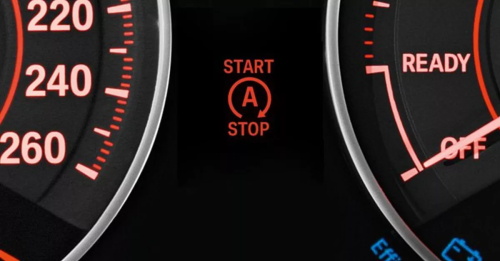
A technician can use a scan tool to evaluate battery state-of-health, sensor readings, charging performance, and stored diagnostic codes. Because start-stop systems depend on multiple modules communicating correctly, guessing often leads to unnecessary parts replacement.
In many cases, a battery health test identifies the underlying cause within minutes. In others, sensor diagnostics reveal inaccurate readings that affect system decisions.
The key takeaway is that a more aggressive auto start-stop system is frequently a symptom rather than a failure. The vehicle is responding to information it receives from batteries, sensors, and software algorithms. Understanding those relationships helps drivers make informed maintenance decisions instead of replacing components unnecessarily.
(This article is intended for informational and educational purposes only. Vehicle systems vary by manufacturer, model year, and software version. Diagnostic procedures should be performed by qualified automotive technicians using manufacturer-approved equipment whenever possible.)
FQAs
1. Can a weak battery make the start-stop system behave differently before the battery fails?
Yes. Many vehicles continuously monitor battery health and may alter start-stop operation long before the battery becomes incapable of starting the vehicle. This often serves as an early warning sign.
2. Does replacing the battery always fix start-stop issues?
No. Sensor faults, software calibration problems, battery registration errors, and charging-system issues can all affect start-stop operation even when a new battery has been installed.
3. Is it harmful to disable the auto start-stop feature?
Generally, no. Most manufacturers allow temporary deactivation without damaging the vehicle. However, fuel savings and emissions benefits are reduced when the feature remains disabled.
About Author
Nathan Mercer is an automotive technology writer and former dealership diagnostic specialist with more than 15 years of experience evaluating electrical systems, battery management technology, and vehicle electronics. His work focuses on translating complex automotive engineering concepts into practical advice for everyday drivers.
References
Analog Devices. Powering infotainment devices in automotive start/stop systems.
Midtronics. (2025). Common battery issues in auto start-stop equipped vehicles.
Auto Training Centre. (2026). Start-stop system problems: Why battery sensors and software matter more than people think.
Stay a little longer and explore more articles on our blog to discover practical automotive insights that can help you understand your vehicle, reduce ownership costs, and avoid unexpected repairs.
Recommended for you: