


The Quiet Rise of Car Wellness Features: Seats, Air Filters, and Fatigue Detection
June 17, 2026
Key Highlights:
● Comfort-focused automotive technology is rapidly shifting from luxury to standard equipment in modern vehicles.
● Advanced seat systems now actively reduce fatigue through posture correction, massage, and adaptive support.
● Cabin air filtration and ionization systems are increasingly engineered to improve respiratory health during commutes.
● Driver fatigue detection systems are becoming widely integrated into safety and infotainment platforms.
Estimated Reading Time: 12 minutes┃Post by: Adrian Keller
Modern vehicles are no longer defined only by horsepower, torque, or infotainment screen size. A quieter transformation is taking place inside the cabin: cars are being engineered as semi-medical comfort environments. Seat architecture, air quality systems, and fatigue detection tools are increasingly designed not just to improve comfort, but to maintain physiological stability during driving. This shift is subtle, but it is fundamentally changing how manufacturers define value in new vehicles.
What was once marketed as “luxury comfort” is now being reframed as measurable wellness engineering—backed by sensor systems, ergonomic research, and in-cabin monitoring technologies that actively respond to human fatigue and stress patterns.
The Cabin as a Controlled Environment
The cabin is no longer just a sealed passenger space focused on temperature control and seating comfort. It is increasingly engineered as a controlled micro-environment that actively regulates air quality, posture support, and driver alertness in real time. Modern systems integrate sensors and automated responses to stabilize conditions such as temperature, humidity, and CO₂ levels while also monitoring driver behavior for early signs of fatigue. Instead of reacting only when discomfort becomes obvious, the vehicle continuously adjusts airflow, seat position, and alert systems to maintain a stable physiological state. This turns the cabin into a feedback-driven system where environmental and human signals are constantly balanced to sustain comfort and attention during driving.
1. Seats Are Becoming Active Biomechanical Systems
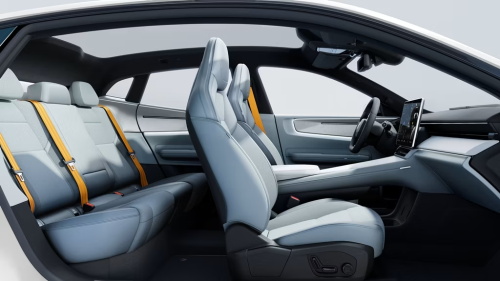
The most visible transformation is occurring in seating. Traditional seats were passive foam-and-frame structures designed for comfort at rest. Today’s systems behave more like adaptive biomechanical platforms.
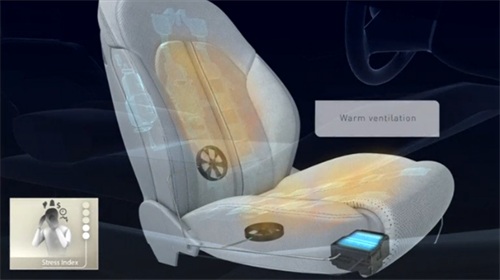
High-end and mid-tier vehicles increasingly include:
● Multi-zone lumbar actuators
● Pressure-distribution sensors
● Ventilation and heating grids
● Integrated massage modules
● Posture memory systems
Recent industry analyses indicate that more than half of new vehicles now include some form of smart seating functionality, ranging from memory foam adjustments to real-time posture adaptation.
How fatigue reduction actually works?
Advanced seat systems do not rely on “comfort feel” alone. They use measurable physiological mechanisms:
Dynamic lumbar adjustment: prevents spinal compression during long drives
Micro-vibration massage cycles: improves blood circulation in gluteal and lumbar regions
Pressure redistribution: reduces localized muscle fatigue
Thermal balancing: maintains stable skin temperature to reduce cognitive strain
Some premium implementations claim measurable fatigue reduction of over 30–40% in long-distance driving scenarios due to these combined effects.
2. Cabin Air Is Now a Health Variable
A car cabin can trap pollutants at concentrations significantly higher than outdoor levels during traffic congestion, particularly when ventilation cycles are not optimized. That creates a direct link between driving conditions and respiratory load.
Automakers are responding by treating air quality as a dynamic parameter rather than a static filter function.
Air quality inside vehicles was historically an afterthought. Today, it is one of the most aggressively engineered wellness dimensions in automotive design.
Modern systems include:
HEPA-grade cabin filtration
Ionization systems to neutralize particulates
Multi-stage pollutant detection
Automated recirculation adjustment based on external AQI
These systems matter more in urban environments where drivers are exposed to fine particulate matter from traffic congestion and industrial pollution.

What’s changing in practice
● Cars now detect outside pollution levels in real time
● Internal sensors adjust airflow mode automatically
● Some systems activate “clean air mode” during tunnels or heavy traffic
This shifts the cabin from passive ventilation to adaptive respiratory management.
3. Fatigue Detection Systems: From Safety to Wellness
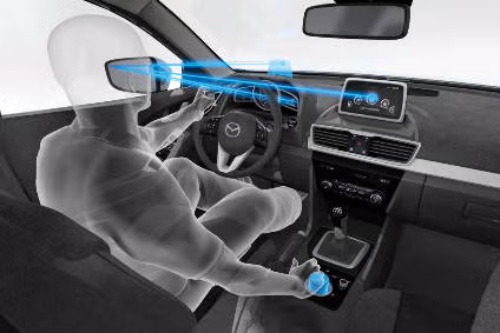
Driver fatigue detection was initially introduced as a safety feature. It is now evolving into a broader wellness monitoring layer. Fatigue detection is becoming mainstream because drivers are spending more time on the road, safety expectations are increasing, and the technology is becoming more affordable. Many modern vehicles already use cameras and sensors for advanced driver-assistance systems, making it easier for manufacturers to add fatigue-monitoring capabilities without significant additional cost. As automakers place greater emphasis on preventing accidents before they occur, fatigue detection is increasingly viewed as a practical safety feature rather than a luxury option, leading to its adoption across a wider range of vehicle segments.
These systems analyze:
● Steering micro-corrections
● Lane-keeping variability
● Eye movement and blink frequency
● Driving rhythm consistency
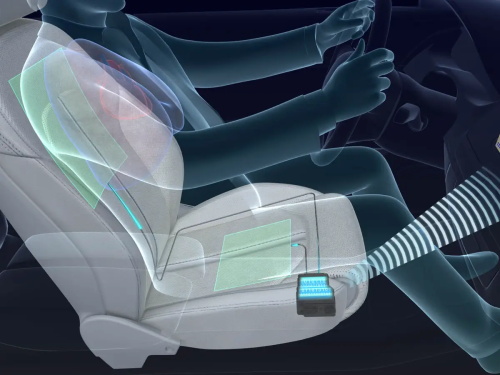
When deviations suggest reduced alertness, the system triggers alerts, seat vibration feedback, or even climate adjustments designed to restore attention.
The system’s logic
Fatigue detection is not based on a single signal. It uses pattern recognition:
● Small steering instability + slower reaction time + lane drift = fatigue probability increase
● Combined signals trigger escalating interventions
These interventions typically progress in stages:
1. Visual dashboard alert
2. Audible warning
3. Steering wheel or seat vibration
4. Recommendation for rest stop
The Convergence: Wellness as a System, Not a Feature
Automotive wellness is no longer emerging as a collection of isolated upgrades—it is consolidating into a unified in-cabin operating layer. Instead of treating seat ergonomics, air quality management, and driver monitoring as separate engineering domains, manufacturers are now linking them through shared sensor inputs and centralized cabin control logic. The seat no longer just reacts to posture; it exchanges data with fatigue detection systems. Air filtration is no longer a fixed cycle; it is dynamically adjusted based on inferred stress levels, respiration patterns, and external pollution load. In more advanced implementations, these subsystems operate as a closed feedback loop where a detected decline in alertness can trigger simultaneous interventions: micro-adjustments in lumbar support, subtle changes in cabin temperature, and increased airflow circulation to stimulate cognitive recovery.
This integration effectively reframes the vehicle interior as a responsive physiological environment rather than a static space. The technical foundation is increasingly built on multimodal sensing—cameras, pressure sensors in seating, steering micro-movement analysis, and environmental detectors feeding into a centralized “cabin intelligence” module. The result is a system that does not simply respond to comfort preferences but continuously recalibrates the interior based on inferred human state. Over time, this creates a shift from user-controlled settings to system-orchestrated wellbeing management, where comfort becomes an algorithmic outcome rather than a manual adjustment.
Why Automakers Are Investing Heavily in Wellness Tech
The aggressive push into wellness-oriented vehicle systems is not primarily a branding exercise—it is a structural response to where differentiation and value creation are moving in the automotive industry. As powertrain technologies, especially in electric vehicles, become increasingly standardized across competitors, traditional performance-based distinctions are eroding. In this environment, the cabin experience becomes one of the few remaining high-margin differentiators, and wellness systems offer a measurable, software-driven way to enhance perceived vehicle sophistication.
At the same time, regulatory and safety pressures are reinforcing this trajectory. Driver monitoring requirements, fatigue detection mandates, and evolving in-cabin safety expectations are pushing manufacturers to embed more intelligent sensing systems by default. Once installed for safety compliance, these systems naturally expand into comfort and wellness applications because the underlying infrastructure—cameras, biometric inference models, and environmental sensors—is already present. This creates a cost-efficient pathway for feature expansion without requiring new hardware platforms.
There is also a data-driven incentive structure shaping investment. Wellness systems generate continuous streams of behavioral and physiological data inside the vehicle: attention patterns, stress proxies, respiration estimates, and interaction timing. This data is valuable not only for safety optimization but also for long-term vehicle design, insurance modeling, and predictive maintenance ecosystems. As vehicles transition toward software-defined architectures, the cabin becomes a persistent sensing environment that supports both real-time interventions and long-term behavioral analytics. In this context, wellness technology is less about comfort as a product feature and more about building a continuously learning mobility platform that aligns safety, personalization, and data intelligence into a single system.
Recommended for you: