


Parking Lot Damage Prevention: Tips for Tight Spaces
June 8, 2026
Key Highlights:
● Tight parking spaces increase the risk of dents, scratches, and minor collisions.
● Choosing the right parking spot can significantly reduce vehicle damage.
● Proper positioning and parking techniques help protect your vehicle.
● Modern vehicle technology can assist, but it should not replace driver awareness.
Estimated Reading Time: 11 Minutes┃Post by: Rowan Mercer
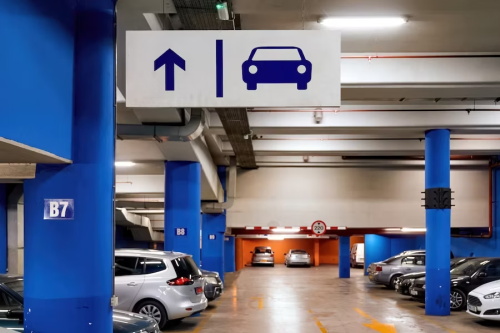
You pull into a busy shopping center on a Saturday afternoon. The parking lot is packed. SUVs are squeezed into compact spaces, shopping carts are scattered near curbs, and impatient drivers circle every aisle searching for an open spot. You finally find a space, carefully park, finish your errands, and return to discover a fresh scratch on your door.
For many drivers, this scenario is frustratingly familiar.
Parking lots may seem harmless compared to highways and busy intersections, but they are surprisingly common locations for vehicle damage. Industry data suggests that parking lots account for a significant share of low-speed vehicle collisions and damage claims, with many incidents involving backing maneuvers, door impacts, shopping carts, or drivers attempting to fit into tight spaces.
The good news is that most parking lot damage is preventable. By understanding how parking lots create risk and adopting a few practical habits, drivers can greatly reduce the chances of dents, scratches, cracked bumpers, and stressful insurance claims.
Why Tight Parking Spaces Cause So Much Damage?
Parking lots combine several risk factors:
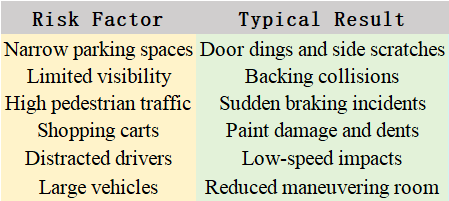
Unlike highway crashes, parking lot incidents usually occur at low speeds. However, even a minor impact can be expensive.
Typical Repair Costs
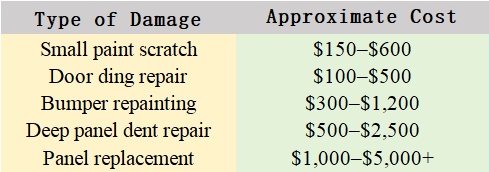
Actual costs vary by vehicle model, paint type, and labor rates.
What makes these incidents especially frustrating is that many occur while the vehicle is parked and unattended.
The Smartest Parking Spot Isn't Always the Closest One
Many drivers instinctively search for the nearest available space. Unfortunately, those spaces often experience the highest traffic volume.
Studies and safety experts consistently recommend choosing less crowded areas whenever practical. Parking farther from entrances may add a short walk but can significantly reduce exposure to careless door openings and shopping cart traffic.
Example
Imagine two available spaces:
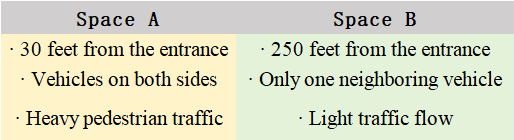
Many experienced drivers choose Space B because the additional one-minute walk often reduces the likelihood of damage.
Community discussions among vehicle owners frequently cite parking farther away as one of the most effective methods for avoiding door dings.
Evaluate Neighboring Vehicles Before Parking
Not all parking spaces carry equal risk. Before committing to a spot, take a few seconds to assess the surrounding vehicles.
Lower-Risk Neighbors
● Well-centered vehicles
● Newer vehicles in good condition
● Compact cars
● Vehicles parked neatly within lines
Higher-Risk Neighbors
● Vehicles parked crookedly
● Large pickup trucks
● Oversized SUVs
● Vehicles already showing extensive damage
● Cars positioned very close to parking lines
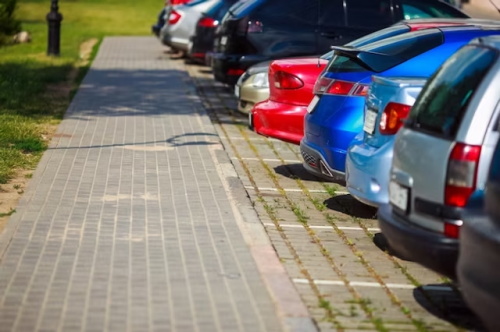
While these observations cannot predict driver behavior, they can help estimate the likelihood of accidental door contact.
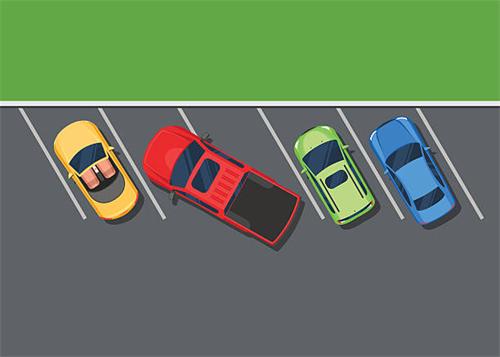
Why Backing Into a Space Can Be Safer
Many experienced drivers prefer backing into parking spaces whenever conditions allow. Although some people find reverse parking more challenging, it offers important advantages when leaving a parking lot later.
When you back into a space upon arrival, you only need to maneuver around visible traffic. When you leave, you can pull forward into the driving lane with a much clearer view of pedestrians, cyclists, shopping carts, and approaching vehicles. This improved visibility reduces the likelihood of collisions and allows you to react more quickly to unexpected hazards.
Backing out of a parking space often creates blind spots, especially when larger vehicles are parked on either side. Drivers may be forced to inch backward slowly until they can see around neighboring vehicles. During that time, pedestrians and moving cars may enter the area unexpectedly. By reversing into the space initially, you avoid this risk when it is time to leave.
Using Parking Technology Effectively
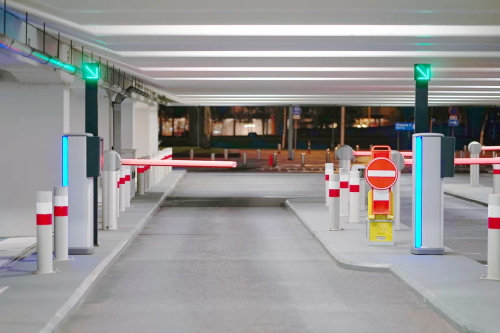
Modern vehicles increasingly include technology designed to make parking safer and easier. Backup cameras, parking sensors, rear cross-traffic alerts, and 360-degree camera systems provide valuable information during parking maneuvers.
However, technology should supplement driver awareness rather than replace it. Cameras can have blind spots, sensors may not detect every obstacle, and poor weather conditions can sometimes affect system performance. Drivers should continue checking mirrors and visually scanning their surroundings before moving the vehicle.
The safest approach combines multiple sources of information. Mirrors, camera systems, and direct observation each provide a different perspective. When used together, they create a more complete understanding of the environment and help reduce the risk of mistakes.
Consider Protective Upgrades
Drivers who regularly park in crowded urban environments may benefit from additional protection.
Common Options
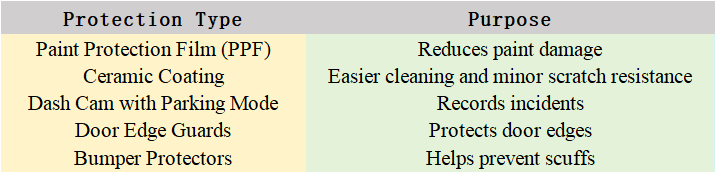
Vehicle-owner communities frequently discuss parking-mode cameras and paint protection products as valuable tools for reducing ownership stress.
While these upgrades cannot prevent every dent, they may reduce repair costs and improve evidence collection after incidents.
The Psychology of Parking Stress
Interestingly, parking lot damage prevention is not only about protecting paint.
It also reduces mental stress.
Many drivers experience anxiety when parking a newer vehicle in crowded areas. Stories shared by vehicle owners consistently mention the frustration of discovering unexplained scratches, dents, or paint damage after routine errands.
Developing a repeatable parking strategy creates confidence:
● Choose less crowded areas.
● Center the vehicle.
● Use cameras and mirrors.
● Inspect surroundings.
● Accept a slightly longer walk.
These habits transform parking from a stressful gamble into a manageable routine.
Parking lots appear simple, yet they remain one of the most common environments for vehicle damage. Tight spaces, distracted drivers, shopping carts, and limited visibility create conditions where dents and scratches can occur within seconds.
Fortunately, prevention is largely within a driver's control. Choosing smarter parking locations, centering the vehicle carefully, using parking technology correctly, and avoiding congested areas can significantly reduce risk.
The next time you're tempted to grab the closest parking space, consider walking an extra minute instead. That short walk may save you from a repair bill, an insurance claim, and the frustration of discovering fresh damage on an otherwise perfect vehicle.
(This article is intended for informational and educational purposes only. Vehicle conditions, parking environments, and local regulations vary. Readers should exercise their own judgment and follow applicable traffic laws and property rules when parking. Cost estimates provided are illustrative examples and may differ based on vehicle type, location, and repair provider.)
FAQs
Q1: Is it safer to park next to expensive vehicles?
Not necessarily, but many drivers believe owners of well-maintained vehicles may be more careful when opening doors. The overall parking environment remains the more important factor.
Q2: Do parking sensors prevent door dings?
No. Parking sensors help during maneuvering but generally cannot stop another person from opening a door into your parked vehicle.
Q3: Are parking lot dents usually covered by insurance?
Coverage depends on your policy and circumstances. Comprehensive or collision coverage may apply, but deductibles and policy terms vary.
About Author
Rowan Mercer is a fictional automotive writer and vehicle ownership researcher with more than 12 years of experience analyzing driver behavior, parking safety, collision prevention, and long-term vehicle maintenance costs. Rowan specializes in practical strategies that help everyday drivers reduce ownership expenses while protecting vehicle appearance and resale value.
References
AutoInsurance.com. (2026). Your 2026 guide to parking lot safety: Avoiding dings, dents and accidents.
SafetyCulture. (2026). Parking lot safety: How to avoid costly accidents.
State Farm. (2026). How to avoid door dings in parking lots.
Stay awhile and explore more articles on this blog for practical, real-world advice that helps you drive smarter, protect your vehicle, and reduce the hidden costs of car ownership.
Recommended for you: