


How to Prevent Grocery Bags From Sliding Across Your Cargo Area
June 13, 2026
Key Takeaways:
● Grocery bags slide because most cargo-area carpets and liners provide limited grip.
● Simple loading habits can prevent crushed produce, broken containers, and spills.
● Cargo nets, organizers, and built-in bag hooks can dramatically reduce movement.
● Weight distribution plays a major role in keeping groceries stable.
● A few inexpensive changes can eliminate most trunk-related grocery damage.
Estimated Reading Time: 10 minutes┃Post by: Ethan Caldwell
You open your trunk after a short drive home from the grocery store and immediately notice something is wrong. The bag containing eggs is on its side. A carton of strawberries has opened and scattered across the cargo floor. A bottle of juice rolled into a corner, and a loaf of bread is now flattened beneath a bag of canned goods.
For many drivers, this situation is surprisingly common.
Modern vehicles are designed with larger cargo spaces than ever before. SUVs, crossovers, hatchbacks, and even many sedans offer generous trunk capacity. However, these larger cargo areas often create an unintended problem: groceries have plenty of room to move. During acceleration, braking, lane changes, and turns, unsecured bags slide across smooth cargo floors, sometimes with enough force to damage their contents.
Automotive cargo-management experts note that cargo nets, tie-down systems, and organizers are specifically designed to reduce movement of loose items during transportation. Cargo nets use tension and anchoring points to restrain items that would otherwise shift around the cargo area.
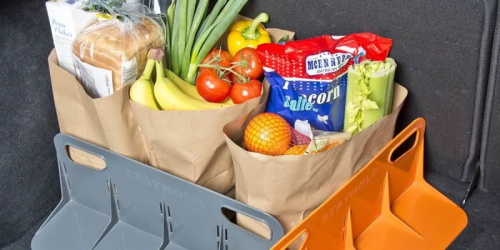
The good news is that preventing grocery movement does not require expensive modifications. Most solutions cost little or nothing and can save hundreds of dollars in wasted food over time. A single damaged grocery run can easily result in $20–$50 worth of wasted food.
Understanding why bags move is the first step toward stopping it.
Why Grocery Bags Slide in the First Place
Most cargo areas use carpet, plastic trim, or rubber liners. While these materials protect the vehicle, they do not necessarily provide enough friction to hold lightweight grocery bags in place.
When a vehicle brakes, everything inside continues moving forward due to inertia. During turns, groceries shift toward the outside of the curve. Even gentle driving creates enough force to move loosely packed bags.
Research on cargo-management systems shows that non-slip mats improve grip, while cargo nets provide physical restraint that limits forward, backward, and side-to-side movement. Cargo nets are particularly effective because they contain cargo rather than simply increasing surface friction.
A typical grocery trip may involve:
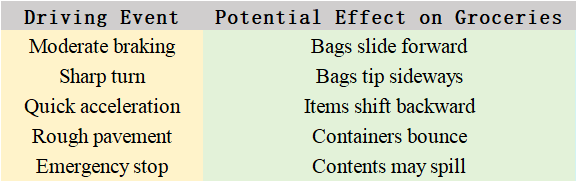
The larger the cargo area, the farther groceries can travel before hitting a sidewall.
This is why many drivers find that groceries remain stable in a packed trunk but slide everywhere in a mostly empty SUV.
Use Your Vehicle's Built-In Cargo Features
Many drivers never realize their vehicle already includes grocery-management tools.
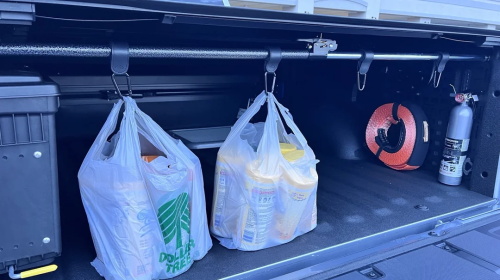
Several manufacturers install grocery hooks, tie-down points, anchor loops, or cargo nets from the factory. Some vehicles even include dedicated grocery-bag holders designed specifically to keep shopping bags upright.
For example, some vehicles from Volvo include cargo-compartment grocery hooks intended to keep shopping bags in place and prevent spills.
Similarly, many vehicle owner manuals describe grocery hooks and cargo nets designed to reduce package movement during transit.
Before spending money on accessories, inspect your cargo area for:
● Grocery bag hooks
● Tie-down loops
● Cargo net anchors
● Adjustable cargo rails
● Storage compartments
● Under-floor cargo bins
Many owners discover these features years after purchasing their vehicle.
Position Heavy Items First
One of the simplest and most effective strategies requires no equipment at all.
Always place heavy items against the rear seatbacks.
For example:
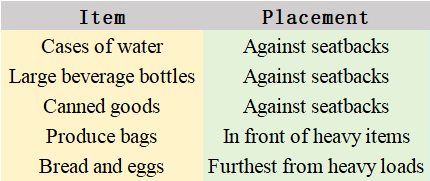
Heavy items create a natural barrier that prevents lighter bags from sliding forward.
Imagine placing a 24-pack of bottled water against the rear seats. That single item can stop multiple grocery bags from moving during braking.
This technique is widely recommended because it uses existing cargo as a stabilizing structure.
Invest in a Cargo Net
Cargo nets remain one of the most effective solutions for grocery movement.
Cargo-management specialists explain that cargo nets create a containment zone that physically restrains items during acceleration, braking, and cornering. Properly anchored nets help keep packages grouped together rather than allowing them to spread across the cargo floor.
A good cargo net provides several advantages:
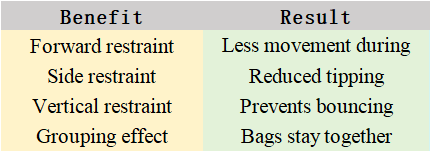
Many drivers on automotive discussion forums describe cargo nets as a major improvement for grocery transportation, particularly in SUVs and hatchbacks.
However, cargo nets work best when groceries are already grouped reasonably close together. Extremely loose or irregularly shaped loads may still require additional containment.
Add a Trunk Organizer
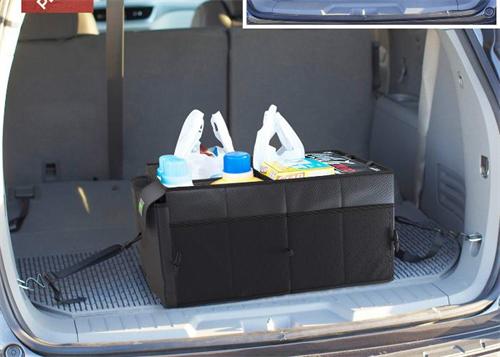
A trunk organizer may provide even better results than a cargo net.
Unlike a net, an organizer creates separate compartments.
This means:
● Eggs stay separate from beverages.
● Produce stays upright.
● Glass jars remain protected.
● Cleaning products remain isolated.
Many drivers report excellent results using collapsible crates or organizers because they provide rigid walls that prevent bags from tipping over. Community discussions frequently mention collapsible crates, storage bins, and organizers as practical solutions for grocery transport.
A three-compartment organizer can typically hold:
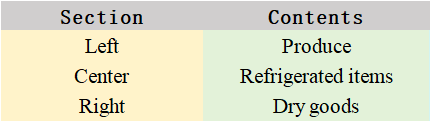
The organizer itself becomes a stabilizing structure.
Install a Non-Slip Cargo Mat
Many factory cargo floors are surprisingly slippery.
A quality non-slip cargo mat increases friction and reduces movement before it starts.
Cargo-management guides note that textured rubber, thermoplastic, or high-friction surfaces can significantly reduce sliding compared with standard cargo carpeting.
Although a mat alone will not fully restrain groceries during aggressive maneuvers, it can substantially reduce movement during normal driving.
The most effective setup often combines:
1. Non-slip mat
2. Cargo organizer
3. Cargo net
Together, these systems address both sliding and tipping.
Use Reusable Grocery Totes
Reusable grocery totes offer another overlooked advantage.
Many reusable bags have reinforced bottoms and rigid side panels.
Compared with thin plastic bags, these totes:
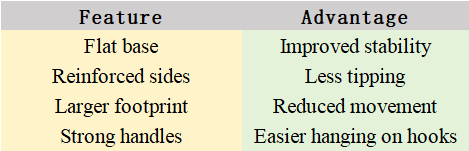
Drivers frequently report that sturdy reusable bags remain upright far better than traditional plastic bags.
Some stores also provide reusable crates or collapsible boxes that function as both shopping containers and cargo organizers.
Don't Leave Empty Space
Empty space is the enemy of cargo stability.
Think about groceries as puzzle pieces.
The more tightly they fit together, the less opportunity they have to move.
If your cargo area is mostly empty:
● Place bags together.
● Use storage bins.
● Use folded towels as spacers.
● Position larger items around smaller ones.
Several drivers report using towels, boxes, and crates to fill gaps and reduce cargo movement effectively.
The objective is simple:
Reduce available movement distance.
A bag that can move only one inch is much less likely to tip over than a bag that can slide three feet.
Develop Better Driving Habits
Even the best cargo-management system has limits. Driving style significantly affects grocery stability.
Consider the difference:
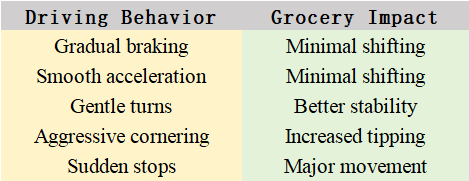
Smooth driving remains one of the most effective grocery-protection strategies.
Building the Ideal Grocery-Transport Setup
For most drivers, the ideal setup is surprisingly simple.
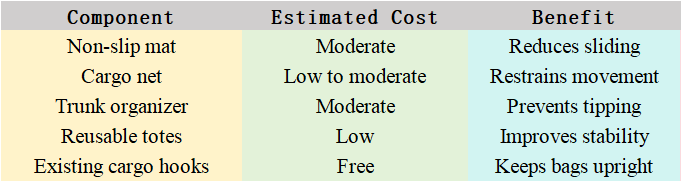
Together, these solutions can eliminate most grocery-related cargo problems.
A few minutes of preparation before loading groceries can save money, reduce waste, and keep your cargo area clean. Once you establish a system, grocery bags stop becoming rolling projectiles and start arriving exactly where you placed them.
(This article is intended for informational and educational purposes only. Vehicle cargo-area designs vary significantly by manufacturer, model, and year. Always follow your vehicle manufacturer's recommendations regarding cargo loading limits, tie-down points, hooks, and cargo-management accessories. Improperly secured cargo may create safety hazards during vehicle operation.)
FAQs
1. Is a cargo net or a trunk organizer better for groceries?
A trunk organizer generally provides better protection for fragile groceries because it prevents bags from tipping over. Cargo nets are excellent for keeping multiple items grouped together. Many drivers achieve the best results by using both.
2. Can I use household items instead of buying accessories?
Yes. Cardboard boxes, plastic storage bins, reusable shopping totes, and folded towels can all help reduce grocery movement and improve cargo organization.
3. Are grocery hooks strong enough for heavy shopping bags?
Not always. Some factory-installed grocery hooks have weight limits. For example, certain vehicle manufacturers specify relatively low maximum loads for cargo hooks. Always consult your owner's manual before hanging heavy bags.
About Author
Ethan Caldwell is a fictional automotive writer and vehicle-ownership researcher specializing in practical car-use solutions, cargo management, maintenance habits, and cost-saving strategies for everyday drivers. His work focuses on helping vehicle owners solve real-world problems through simple, affordable, and effective techniques.
References
Owleys. (2026). Secure SUV Trunk Cargo: Mats, Bins, Straps.
Alibaba Product Insights. (2026). Car Trunk Mat vs Cargo Net.
Stay on this blog a little longer and explore more practical vehicle-ownership guides designed to help you save money, protect your car, and make everyday driving easier.