



How to Identify Subtle Tire Alignment Issues Before They Cause Wear
June 14, 2026
In this Article:
● Tire alignment problems often begin with subtle symptoms that many drivers overlook.
● Early detection can prevent premature tire replacement and expensive repairs.
● Small steering changes may reveal alignment issues before visible tire wear develops.
● Regular tire inspections improve vehicle safety for families.
● Simple monthly checks can save hundreds of dollars over a vehicle's lifetime.
Estimated Reading Time: 11 minutes┃Post by: Avery Langford
A father of two noticed that his family SUV seemed to require slightly more steering correction during a weekend road trip. The vehicle wasn't pulling dramatically, there were no warning lights, and the tires looked normal from a distance. Because everything appeared fine, he ignored the sensation.
Six months later, the front tires needed replacement nearly 20,000 miles earlier than expected.
The culprit was a minor alignment problem that had quietly worn away valuable tread for thousands of miles.
This situation is remarkably common. Tire alignment issues rarely appear overnight. Instead, they develop gradually after encounters with potholes, curb impacts, rough roads, or normal suspension wear. By the time uneven tire wear becomes obvious, much of the damage has already occurred. Industry maintenance sources note that misalignment can significantly shorten tire lifespan and lead to uneven tread wear, steering problems, and reduced driving safety.
For families trying to manage household budgets, catching these problems early can mean the difference between a routine alignment service and replacing an entire set of tires.
What Exactly Is Tire Alignment?
Despite the name, alignment is not an adjustment made directly to the tires.
Instead, technicians adjust the suspension angles that determine how the wheels contact the road. When these angles fall outside manufacturer specifications, the tires no longer roll exactly as intended. This causes friction, uneven wear patterns, and steering abnormalities.
The three primary alignment measurements are:
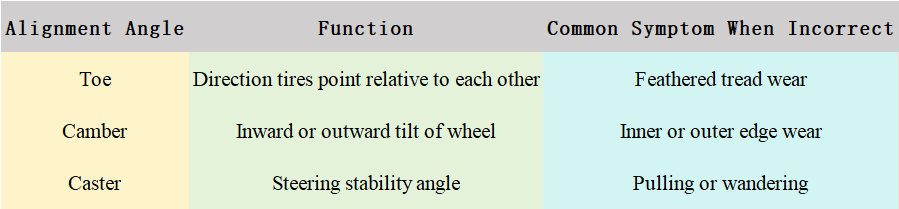
Even small deviations can gradually create expensive tire wear.
Why Parents Should Care About Alignment
Many family vehicles accumulate mileage quickly. School drop-offs, sports practices, grocery runs, weekend activities, and family vacations can add thousands of miles annually. A minor alignment problem affects every mile driven.
Potential consequences include:
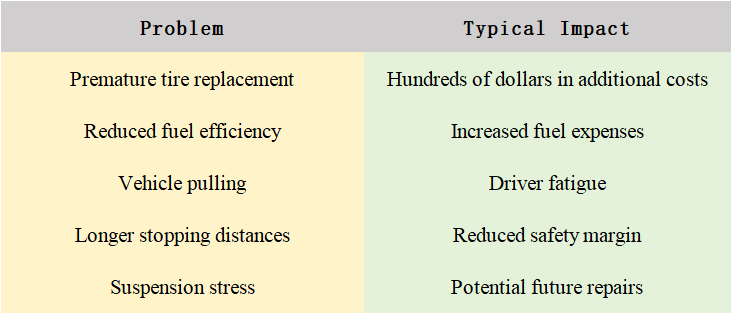
Several automotive maintenance sources emphasize that misalignment affects tire life, vehicle handling, and overall driving safety.
The Earliest Warning Sign: Subtle Steering Drift & Wheel Offset
One of the earliest and most frequently missed indicators of a developing alignment issue is not a dramatic pull—it is a small, consistent change in how the vehicle tracks forward. Drivers often adapt to it unconsciously, which allows tire wear to continue long before visible damage appears.
In practice, this early warning shows up in three closely related ways: a mild drift to one side on level roads, a need for constant micro-corrections to keep the car centered, and a steering wheel that no longer sits perfectly straight when the vehicle is traveling forward. Industry references consistently note that these symptoms often appear before uneven tire wear becomes visible, making them some of the most valuable early detection clues for alignment problems.
A key detail is that this drift is usually not strong enough to feel like losing control. Instead, it feels like the vehicle is “lightly leaning” left or right unless the driver actively corrects it. Many drivers assume this is caused by road slope, wind, or tire pressure—and those factors should indeed be ruled out first—but persistence across multiple roads is what makes the pattern meaningful.
Simple Steering Drift Test
This at-home check is designed to separate normal road conditions from early alignment issues. It should only be done in a safe environment with light traffic and a straight, level roadway.
1. Set tire pressure correctly first, matching the door-jamb specification.
2. Drive at a steady speed (approximately 35–60 mph on a straight road).
3. Hold the steering wheel lightly—do not fully relax grip or remove hands.
4. Observe whether the vehicle consistently trends left or right.
5. Repeat the test on at least two different roads with different surfaces.
If the vehicle drifts in a consistent direction across multiple roads, the likelihood of alignment-related drift increases significantly. If the direction changes depending on the road, the cause is more likely external (road crown, wind, or surface slope).

A more reliable variation of this test is to briefly center the steering wheel visually while driving straight. If the car maintains forward motion only when the wheel is slightly offset, this often suggests early misalignment—particularly toe imbalance or minor steering angle shift.
Steering Wheel Centering Check
Another early signal is the relationship between the steering wheel and vehicle direction.
On a properly aligned vehicle, the steering wheel remains centered when driving straight on a level road. When alignment begins to drift, the driver may notice one of the following:
● The steering wheel is slightly rotated while the car travels straight.
● The wheel slowly shifts off-center over time without obvious cause.
● The driver subconsciously compensates, no longer noticing the offset.
Even a small deviation (approximately a few degrees of rotation) can indicate that front wheel angles are no longer balanced. This is especially important because steering wheel offset often appears before visible tire wear patterns develop, making it one of the most reliable early diagnostic clues when combined with drift behavior.
Simple Monthly Maintenance Routine
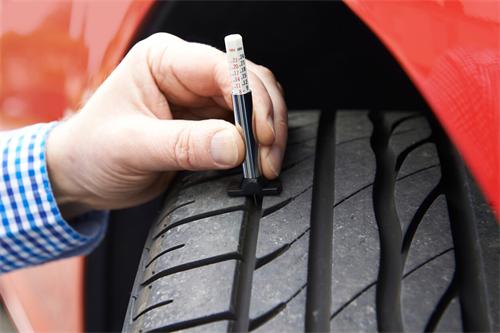
A practical monthly routine can help prevent alignment-related damage. Checking tire pressure one week, inspecting tread the next, observing steering behavior another week, and listening for noise changes completes a full cycle of monitoring.
This approach helps identify issues early before they become costly repairs.
When to Seek Professional Inspection
Professional alignment service is recommended if consistent pulling, uneven wear, steering wheel offset, vibrations, or post-impact changes occur. Modern alignment equipment can detect precise deviations that are not visible during casual inspection.
Conclusion
Tire alignment problems rarely announce themselves dramatically. More often, they begin with small steering corrections, subtle drift, slightly uneven tread wear, or an off-center steering wheel. These early clues are easy to dismiss, especially for busy parents managing countless daily responsibilities.
Yet those small clues often represent the best opportunity to prevent expensive tire replacement, improve fuel efficiency, and maintain safer vehicle handling.
A few minutes of observation each month can reveal alignment issues long before significant tire wear develops. For families trying to balance safety and household budgets, that simple habit can deliver substantial long-term savings.
(This article is intended for informational and educational purposes only. It does not replace professional automotive diagnosis, maintenance, or repair advice. Vehicle conditions vary, and readers should consult qualified automotive technicians for inspections and repairs related to tire alignment, suspension systems, steering components, or vehicle safety concerns.)
FAQs
1. How often should I have my alignment checked?
Many technicians recommend checking alignment whenever you install new tires, notice steering changes, or experience a significant pothole or curb impact. There is no universal mileage interval for every vehicle.
2. Can tire rotation fix an alignment problem?
No. Tire rotation helps distribute wear more evenly but does not correct improper wheel angles. Existing alignment problems can continue causing abnormal wear after rotation.
3. Is a slight pull always caused by alignment?
No. Tire pressure differences, brake issues, suspension wear, and tire-related factors can also cause pulling sensations. Alignment is one possibility among several.
About Author
Avery Langford is a fictional automotive safety writer and family transportation researcher with more than a decade of experience studying vehicle maintenance practices that help households reduce ownership costs. Avery specializes in translating technical automotive topics into practical guidance for parents who want safer, more reliable family transportation without unnecessary repair expenses.
References
FixGo. (2026). Uneven tire wear explained: What it means and why it matters.
S&S Tire. (2026). Why your car pulls to one side and when tires are the problem.
TireGrades. (2026). Tire alignment guide.
Stay awhile and explore more articles on our blog for practical family-focused vehicle tips that help keep every trip safer, smoother, and more affordable.
Recommended for you: