


How to Make Rear Passengers More Comfortable on Long Road Trips
June 18, 2026
Key Points:
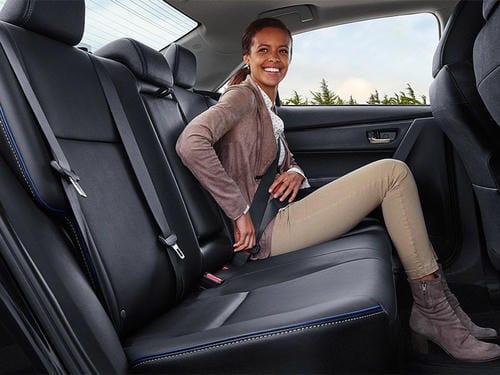
● Rear-seat comfort depends on posture, spacing, and climate control rather than cushioning alone.
● Small adjustments like seat angle and leg positioning significantly reduce fatigue and irritability.
● Break schedules every 2–3 hours improve circulation and reduce stiffness for all passengers.
● Entertainment and sensory management reduce perceived travel time for rear passengers.
● Proper vehicle preparation prevents most long-trip comfort complaints before they begin.
Estimated Reading Time: 10 minutes┃Post by: Dr. Evelyn Carter
Long road trips rarely fail because of distance alone—they fail because the rear seat becomes a confined micro-environment where discomfort accumulates faster than it can be corrected. What begins as mild shifting in the seat gradually escalates into complaints about leg space, temperature imbalance, neck strain, and boredom-driven irritability. Research and field observations from long-distance travel safety guidance consistently show that discomfort is less about seat softness and more about posture stability, circulation, and environmental control .
In practical terms, rear passengers—especially children and elderly travelers—are sensitive to three compounding stressors: static posture, uneven airflow, and cognitive boredom. The solution is not a single “comfort upgrade,” but a system of small, controlled adjustments made before and during the trip.
Start with Seat Geometry, Not Cushions
Most families assume comfort begins with adding pillows or seat pads. In reality, the first variable is geometry: seat angle, headrest position, and leg alignment.
A rear passenger sitting too upright experiences lumbar compression after roughly 60–90 minutes, while a slightly reclined posture reduces spinal load distribution. Similarly, a poorly aligned headrest leads to “forward head drop,” which is one of the most common causes of neck fatigue in sleeping children.

Practical setup before departure:
● Adjust rear seatback to a mild recline (100–110° if adjustable)
● Ensure headrests are aligned with the top of the ears
● Avoid forcing legs into full extension or deep bend positions
Travel ergonomics research consistently highlights that micro-adjustments in posture reduce fatigue accumulation more effectively than cushioning alone .
Manage Leg Positioning to Prevent Circulation Fatigue
One of the most overlooked causes of rear-seat discomfort is restricted lower-limb movement. Sitting still for extended periods reduces venous return in the legs, which contributes to stiffness and restlessness.
Even in children—who are more flexible than adults—static leg positioning becomes uncomfortable over time. Observational safety guidance notes that children naturally shift into alternate positions (cross-legged, sideways sitting within restraint limits) to relieve pressure points .
What works in real-world trips:
● Encourage slight knee bend instead of full extension
● Allow periodic repositioning during stops
● For long trips, plan standing/stretch breaks every 2–3 hours
A simple rule: if passengers haven’t changed position in 90 minutes, discomfort is already building.
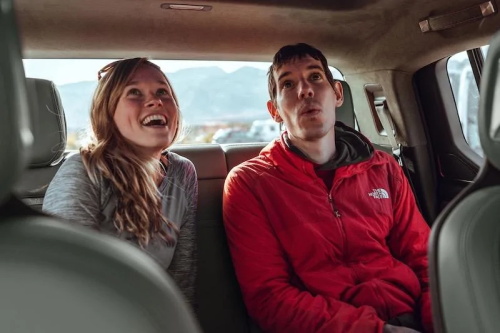
Climate Control: The Silent Comfort Variable
Rear passengers often experience a different microclimate than the front seats. In many vehicles, rear airflow is weaker, delayed, or unevenly distributed.
This leads to the common complaints:
● “It’s too hot back here”
● “The air doesn’t reach us”
● “It feels stuffy”
Practical adjustments:
● Direct rear vents downward rather than toward faces
● Use low-speed continuous airflow instead of intermittent bursts
● Crack opposite windows slightly to balance cabin pressure
● Pre-cool or pre-heat the vehicle before passengers enter
Comfort studies in long-distance travel consistently identify temperature inconsistency as a primary fatigue multiplier, especially in children and older adults.

Noise, Light, and Cognitive Load Control
Rear-seat discomfort is not purely physical—it is also cognitive. Noise fatigue and visual overstimulation can increase perceived discomfort even when physical conditions are stable.
What reduces this:
● Soft ambient audio instead of loud music
● Window sunshades to stabilize light exposure
● Limiting rapid visual stimulation (e.g., switching screens frequently)
● Introducing “quiet windows” during long highway segments
Sleep research on travel environments shows that stable light and sound conditions improve rest quality significantly during transit .
Stop Strategy: The Most Effective Comfort Tool
No adjustment inside the vehicle can replace the physiological reset that happens during stops. Sitting continuously beyond 2–3 hours leads to measurable stiffness and reduced circulation efficiency .
A practical stop rhythm:

What passengers should do during stops:
● Walk for 3–5 minutes
● Stretch hips and calves
● Reset seating posture before re-entering the car
These interruptions are not delays—they are preventive interventions against accumulated discomfort.
Rear Passenger Entertainment as Comfort Engineering
Entertainment is often dismissed as “distraction,” but in long-distance travel it functions as cognitive load redistribution. When the brain is engaged, physical discomfort is perceived less intensely.
Effective real-world tools:
● Rotating activity kits (not everything available at once)
● Audiobooks or podcasts with predictable pacing
● Scenic “spotting games” (cars, animals, landmarks)
● Pre-downloaded offline media for consistency
Reddit-based travel reports from families consistently show that novelty rotation (introducing new items intermittently) is more effective than providing all entertainment at once, especially on trips exceeding 4 hours.
Rear Seat Role Assignment (Often Ignored but Highly Effective)
Comfort improves when passengers are positioned according to need rather than convenience.
Effective assignments:
● Motion-sensitive passengers → window seats
● Children prone to sleep → center or stable rear positions
● Elderly passengers → seats with easiest entry/exit access
This aligns with practical long-trip guidance emphasizing seat selection as a comfort determinant, not just seating availability .
(This article is intended for general informational purposes only and does not substitute for professional medical, safety, or automotive advice. Always follow manufacturer guidelines for seating, child restraint systems, and vehicle safety procedures.)
FQAs
1. Are seat cushions actually necessary for rear passengers?
Not usually. Most discomfort comes from posture and airflow rather than seat padding. Cushions help only in cases of prolonged travel or pre-existing back issues.
2. How often should kids get out of the car on long trips?
A practical standard is every 2–3 hours, with at least 10–15 minutes of movement to reset circulation and reduce restlessness.
3. What is the most common mistake parents make with rear-seat comfort?
Overloading the back seat with entertainment while ignoring temperature, posture, and stop timing—physical discomfort cannot be solved by distraction alone.
About Author
Dr. Evelyn Carter is a transportation ergonomics researcher specializing in passenger comfort systems and long-distance travel behavior. Her work focuses on how posture, environmental control, and behavioral design influence fatigue in family and multi-passenger travel environments.
References
CarsafetyNow. (2025). Rear-facing car seats safety guide. Sleep.com. (2021). How to sleep in a car: Tips for road trips.
Convoy Vibe. (2026). Maximise comfort on long trips: Proven strategies for travellers.
GreatSchools Editorial Team. (2023). Surviving long car trips with kids.
Recommended for you: