


How Tariffs and Supply Chains Still Affect Car Prices in 2026
June 15, 2026
Tariffs introduced in 2025 are still embedded in 2026 vehicle pricing structures. Supply chain fragmentation continues to amplify cost differences between similar models. Automakers are partially absorbing tariff costs, but not eliminating them. Imported vehicles and complex EV supply chains remain the most exposed to price volatility. Even “stable” sticker prices often hide shifting costs in financing, incentives, and trim packaging.
Estimated Reading Time: 11 minutes┃Post by: Nolan Reeves
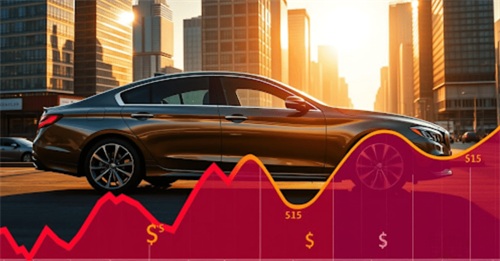
The average car buyer in 2026 is no longer dealing with sudden price shocks—they are dealing with persistent pricing distortion. A mid-size SUV that cost $42,000 two years ago now routinely lists closer to $46,000–$49,000 depending on trim and sourcing, while nearly identical competitors can differ by several thousand dollars purely based on component origin and assembly location.
This uneven pricing environment is not accidental. It is the cumulative result of tariffs introduced in 2025, ongoing parts duties, and a global supply chain that has not fully stabilized since the pandemic-era restructuring. Recent industry analyses show that imported vehicles can still carry $5,000–$8,900 in tariff-related cost pressure, while even domestically assembled vehicles face $1,600–$2,000 in indirect increases through parts and logistics channels.

What makes 2026 distinct is not the presence of tariffs alone—it is the way tariffs have become embedded into baseline pricing assumptions.
The Tariff Layer That Never Fully Went Away
The 2025 tariff framework on imported vehicles and parts—widely reported at around 25% on certain categories—did not disappear in 2026. Instead, it evolved into a layered system of exemptions, offsets, and partial compliance adjustments.
Manufacturers now price vehicles with what economists call a “tariff-adjusted MSRP floor.” This means:
Vehicles with high foreign component content are priced assuming long-term duty exposure
USMCA-compliant vehicles receive partial offsets, but not full relief
EVs remain exposed due to battery and semiconductor sourcing outside North America
Even when headline tariffs are partially mitigated, downstream costs persist because suppliers upstream already adjusted their pricing. As one industry breakdown notes, roughly half of vehicles sold in the U.S. are still affected in some form by tariff-linked supply chain exposure.
The practical outcome is simple: tariffs stopped being a temporary surcharge and became a structural pricing variable.
Why Supply Chains Still Haven’t Fully Normalized
The modern automotive supply chain is not a linear pipeline—it is a multi-layered global dependency network involving:
Semiconductor fabrication (Taiwan, South Korea, U.S.)
Battery cell production (China, EU, North America expansion zones)
Steel and aluminum inputs (global commodity markets)
Final assembly (Mexico, Canada, U.S., Germany, Japan)
Each layer is now subject to different tariff exposures and logistics constraints.
Even when tariffs are not directly applied, re-routing production creates cost friction. For example, shifting a wiring harness supplier from Southeast Asia to North America can increase unit cost by 8–15% in the short term due to labor and tooling changes.
This is why supply chain “rebalancing” has not reduced prices—it has redistributed them.
A key structural issue in 2026 is dual sourcing inefficiency: automakers maintain redundant supplier networks to avoid tariff exposure, but those redundancies increase fixed costs. Instead of one optimized global chain, they now operate parallel regional chains.
The “Hidden Inflation” in Vehicle Pricing
One of the defining characteristics of the 2026 automotive market is that pricing pressure is increasingly hidden from the sticker price. Instead of frequent MSRP jumps, automakers rely on indirect mechanisms that preserve the appearance of stability while gradually increasing effective transaction costs.

These mechanisms include reduced incentives, tighter financing offers, higher destination fees, and changes in trim availability that push buyers toward more expensive configurations. As a result, even when MSRP changes appear modest, the actual amount paid at the dealership often tells a different story.
Industry data shows that automakers initially absorbed a large portion of tariff-related costs to avoid immediate demand shocks. However, that absorption capacity has been shrinking, leading to gradual pass-through effects that are becoming more visible in 2026 pricing behavior .
The outcome is a pricing system where the visible number on the window sticker is no longer the most important figure in understanding affordability.
Why Imported Cars Feel Disproportionately Expensive
Imported vehicles continue to experience the strongest pricing pressure. This is not simply due to tariffs themselves but due to compounding supply chain layering.
A single imported model may include:
● Engine from one country
● Transmission from another
● Electronics from a third
● Final assembly in a fourth
Each cross-border movement introduces tariff exposure or compliance costs.
Cost stacking in imported vehicles

As a result:
Imported SUVs and sedans can carry $5,000–$9,000 cost inflation
Entry-level imported vehicles face the steepest percentage increases
Luxury imports often mask increases through feature bundling
Meanwhile, domestic vehicles are not immune. Even U.S.-assembled vehicles still depend heavily on imported semiconductors and EV battery components, which remain exposed to global trade friction.
Why EV Pricing Volatility Is Higher Than ICE Vehicles
Electric vehicles remain especially sensitive to tariff and supply chain pressure due to:
Battery material sourcing concentration
Limited domestic refining capacity for critical minerals
Higher semiconductor dependency
Rapidly evolving platform designs
Even small tariff adjustments on lithium, nickel, or imported battery cells can ripple through entire vehicle lineups.
This is why EV pricing in 2026 shows greater variance across similar models than internal combustion vehicles. Two EVs in the same segment may differ significantly in price not because of features—but because of battery origin and supply chain structure.
What This Means for Buyers in 2026
For buyers, the most important realization is that volatility has not disappeared—it has become less visible and more distributed across the purchasing process. The total cost of ownership is now influenced not only by MSRP but also by incentives, financing terms, and supply chain timing.
Vehicle origin, component sourcing, and production timing now matter as much as brand or model selection. Buyers who focus only on sticker price risk missing meaningful differences in actual transaction cost.
In practical terms, affordability in 2026 is no longer determined by a single price point but by a layered set of economic variables that interact in subtle ways.
(This article is for informational purposes only and reflects general market analysis based on publicly available industry reporting. Automotive pricing varies by region, dealer strategy, and manufacturer policy. Readers should verify current pricing and incentives directly with dealerships before making purchasing decisions.)
FQAs
1. Are tariffs still directly increasing car prices in 2026?
Yes, but mostly indirectly. Many tariffs introduced earlier are now embedded in supplier contracts and pricing structures rather than appearing as separate line items.
2. Why do two similar cars have very different prices?
Differences often come from supply chain origin, not features—especially battery sourcing, semiconductor inputs, and assembly location.
3. Will car prices go back down once supply chains stabilize?
Unlikely in the short term. Even if supply chains stabilize, pricing tends to remain anchored at higher levels due to persistent input costs and reduced incentives.
About Author
Nolan Reeves r is an automotive market analyst specializing in global supply chains, vehicle pricing dynamics, and manufacturing economics. With over a decade of experience tracking OEM pricing behavior and trade policy impacts, he focuses on translating complex industrial shifts into practical insights for everyday car buyers.
References
Kelley Blue Book. (2026). Tariff costs: New car prices up 10% since last year.
WardsAuto. (2025). Tariffs push prices up, auto sales down in 2026.
Cox Automotive. (2026). Automotive pricing and supply chain outlook. Internal industry briefing summary.
Stay with this blog to explore deeper breakdowns of how global economic forces quietly shape the price of every vehicle you see on the road.
Recommended for you: